Speakers

Elizabeth G. Campolongo 
Senior Data Scientist for the Imageomics Institute, The Ohio State University (United States)
AI for Nature: Exploring our Natural Heritage
Data about our natural world is being collected at an astounding rate, which, coupled with increases in computational capacity, has transformed how we study nature. Extensive digitization efforts by natural history collections around the world, growing community engagement through citizen science platforms, and increasing accessibility and sensitivity of sensor technologies have produced vast quantities of data faster than we can process and analyze through traditional methods. In this talk, we will discuss some recent advances and ongoing community initiatives designed to help bridge this gap, enabling researchers to harness the colossal trove of biodiversity data. In particular, we will highlight visualization and analysis techniques built on biological foundation models and introduce the FAIR4AI infrastructure initiative, designed to unlock these resources at scale. There is no AI without data, and by facilitating large-scale content-based analysis across diverse collections, we aim to ensure the scientists generating the data reap the benefits of these AI-enabled advances.
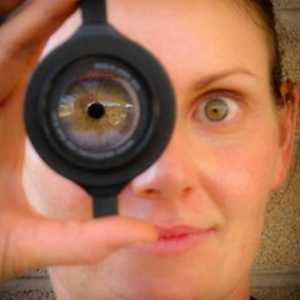
Emily Baird
Professor at the Stockholm University (Sweden)
Using micro-CT to explore the visual ecology of insects
Insects rely on vision to control many different behaviours from simple control of movement and finding food to complex long-distance navigation. To do this, they need to reliably extract relevant information from their visual environment. While some extreme adaptations in insect eyes have been studied–such as in nocturnal insect eyes or in predatory flies–we understand little about how insect vision is adapted to species' habitats and behaviour. To address this knowledge gap, we require high-throughput analyses of the fine structure of insect eyes, something that micro-CT imaging techniques combined with machine-learning segmentation approaches are well suited for. In this talk, I will present the work that my lab has been doing to develop such methods and the results of our efforts to apply these to a range of different specimens, from fossils and museum specimens to fresh-caught individuals.

Moritz Lürig
Group Leader at the Leibniz Center for the Analysis of Biodiversity Change (LIB) in Bonn (Germany)
Navigating the complexity of butterfly wing patterns with computer vision
Natural history collections are the largest archives of organismal phenotypes, and digitization is rapidly making millions of specimens available for quantitative biological research. A major challenge is to navigate this staggering body of phenotypic complexity and quantify variation in ways that enable biologically meaningful comparisons. Lepidoptera (butterflies and moths) are a megadiverse group (approx. 160,000 described species), and have provided classic examples for the study of developmental complexity and ecological significance of animal coloration. They are also exceptionally well suited to study phenotypic diversification using computer vision: their wings carry diverse, evolutionarily relevant color patterns, yet this enormous permutational complexity is largely confined to two dimensions. Moreover, Lepidoptera have long fascinated biologists and the general public alike, making them extremely well represented in museum collections and citizen science databases. Here I show how computer vision can unlock pinned Lepidoptera specimens from museum collections as a powerful resource for biological research. Using Nymphalidae, the largest butterfly family, as a case study, I demonstrate how AI-derived features can reveal major axes of evolutionary variation, and how this approach can scale from individual to collection-wide phenomic studies across butterflies, moths and other taxa.

Joakim Bruslund Haurum
Assistant Professor at the University of Southern Denmark (Denmark)
Multimodal AI for Ecological Monitoring: Images and DNA Barcodes
Measuring biodiversity is crucial for understanding ecosystem health. However, differentiating different species often requires taxonomists who have acquired expert level knowledge over several years. This is both time inefficient and the science of taxonomy has been de-prioritized over the years. Therefore, developing Computer Vision and AI methodologies and benchmarks specifically for biodiversity monitoring is of great importance, in order to alleviate, assist, and enable domain experts. In this talk, I will present recent work where we have developed the multimodal benchmarks and methods for biodiversity monitoring. These work focuses on the use domain knowledge available from unique domain modalities such as DNA barcode and text-based representations of taxonomic labels.